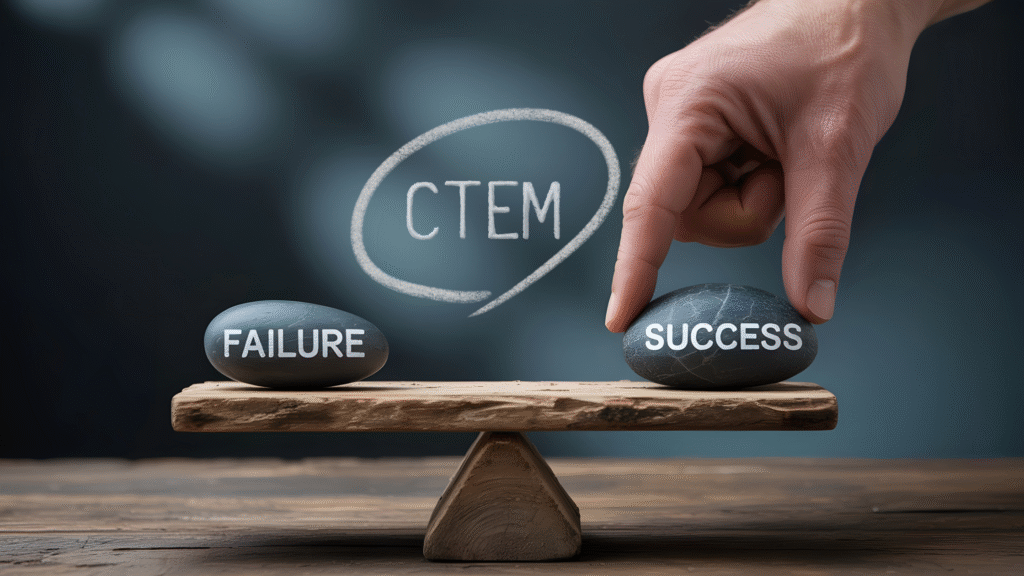
Continuous Threat Exposure Management, or CTEM, has become one of the most widely adopted frameworks in enterprise security. Organizations have invested heavily in exposure management platforms, deployed continuous discovery, and stood up dashboards that surface exposure across the environment. Yet many of these same organizations report a frustrating outcome: significantly more visibility, without a corresponding improvement in risk reduction.
At Inspire, we see a consistent reason for this gap. CTEM is frequently implemented as a technology initiative when it is fundamentally an operating program. The distinction determines whether an exposure management investment produces results or simply produces reports.
A capable exposure management platform can scan, correlate, score, and present exposure with impressive fidelity. What no platform can do is establish who owns a given remediation, determine what gets prioritized when competing exposures demand the same limited resources, resolve the situation when an owner lacks capacity, or translate a technical finding into a business decision that a leader will stand behind. These are not gaps waiting to be closed in a future software release. They are the responsibilities of an operating model, and building an operating model is organizational work.
The CTEM lifecycle is commonly described in five stages: scoping, discovery, prioritization, validation, and mobilization. Tooling maturity is concentrated in the earlier, more technical stages. Discovery and validation are well served by modern platforms. Mobilization, the stage at which exposure is driven down through ownership, coordination, and follow-through, is the least automated and the most dependent on people and process. It is also, in our experience, the stage where programs most often stall.
This has a clear implication for security leaders. The stage that most determines whether a CTEM program delivers value is the stage that tooling supports least. Organizations that concentrate their energy on platform selection and discovery coverage, while under-investing in ownership, cadence, and decision rights, tend to build programs rich in findings and poor in outcomes.
A durable CTEM program depends on several elements that exist outside the toolset. It requires clear ownership, a named individual with genuine authority to drive remediation, rather than diffuse responsibility spread across multiple teams. It requires prioritization grounded in business context, so that decisions reflect what a system means to the business rather than severity scores alone. It requires an operating cadence, a recurring rhythm in which open exposures receive sustained attention until they are resolved. And it requires deliberate ownership of the handoffs between security and the business, where remediation frequently stalls when no one owns the translation from technical finding to business action.
For security leaders evaluating the health of an exposure management program, we recommend a simple diagnostic question: when an exposure is validated, what happens next, specifically? A clear, owned, time-bound answer indicates a functioning program. A vague answer indicates that the investment has produced visibility without management, and that the path forward is unlikely to be another tool.
Inspire helps organizations close exactly this gap, turning exposure management from a tooling initiative into an operating program that produces decisions, accountability, and sustained risk reduction. If your program has visibility but not traction, the opportunity is almost never in the dashboard. It is in the operating model beneath it.

